Why Strength Gains Slow and How to Fix It?


You train hard, stay consistent, and still your strength stops improving. The weights feel heavier than they should. Progress slows, even when your effort stays the same.
You train hard, stay consistent, and still your strength stops improving. The weights feel heavier than they should. Progress slows, even when your effort stays the same. That phase can feel frustrating because nothing in your routine seems wrong on the surface.
Many lifters reach this point and start adjusting workouts, adding more volume, or pushing longer sessions. Some look toward structured support systems like those offered by 1st Phorm to understand what might be missing from their routine. The answer often lies deeper than programming.
Your body adapts to repeated stress. Once it becomes efficient at handling your current workload, progress naturally slows down. Strength development depends on more than just training intensity. Your muscles need enough stored energy, proper recovery, and consistent support to keep growing stronger.
Without that foundation, your performance plateaus. You feel stuck even though you are doing everything right.
To move forward again, you need to support how your body produces energy during training. Once that system improves, strength gains start returning in a steady and noticeable way.
Why Strength Gains Stall Over Time?
Strength increases quickly in the early stages of training. Your body responds fast because the stimulus feels new. Muscles adapt, coordination improves, and your nervous system becomes more efficient.
After some time, that rapid progress slows. Your body becomes familiar with the stress you place on it. The same exercises, weights, and volume no longer challenge your system in the same way.
Energy production plays a major role here. Strength training relies heavily on short bursts of high-intensity effort. Your body uses stored energy, specifically ATP, to power those movements. When ATP availability becomes limited, your performance drops.
You may notice:
- Reduced power during lifts
- Slower recovery between sets
- Difficulty increasing weight
- Fatigue setting in earlier
These signs often indicate that your energy systems need support, not just your training plan.
Mistakes That Hold Back Strength Progress
Training without progression
Repeating the same weights without structured overload limits growth. Your body needs increasing demand to adapt further.
Poor recovery habits
Lack of sleep, high stress, and inconsistent nutrition reduce your ability to rebuild muscle tissue. Recovery directly affects strength output.
Low energy availability
If your body lacks fuel, performance suffers. Strength training demands quick energy, not just long-term endurance.
Neglecting supplementation
While not mandatory, certain supplements support energy production at a cellular level. Ignoring them can slow progress, especially during intense training phases.
Overcomplicating routines
Adding too many exercises or constantly changing programs can reduce effectiveness. Consistency with the right support works better.
How Your Body Produces Strength?
Every rep you perform depends on energy stored inside your muscles. That energy comes from ATP, which fuels short bursts of effort like lifting weights or sprinting.
The challenge is that ATP stores are limited. During intense exercise, they get used quickly. Your body then relies on creatine phosphate to regenerate ATP and maintain performance.
When creatine levels inside your muscles are higher, your body can:
- Produce more energy during lifts
- Maintain strength for longer sets
- Recover faster between exercises
- Improve overall training output
This process directly affects how much weight you can lift and how consistently you can perform.
Why Creatine Matters for You?
Creatine remains one of the most researched and widely used performance supplements. Its role stays simple but effective. It supports your body’s ability to produce quick energy.
When you supplement with creatine, your muscle stores increase. That leads to better performance during high-intensity activities.
You may notice:
- Increased strength over time
- Improved muscle fullness
- Better recovery between sets
- Higher training volume
Creatine does not act as a stimulant. It works at a cellular level, supporting energy production rather than masking fatigue.
A Closer Look at Micronized Creatine Monohydrate
When choosing a creatine supplement, quality and absorption matter. Micronized Creatine Monohydrate by 1st Phorm focuses on purity and usability.
This product uses creatine monohydrate, which is the most studied and proven form of creatine. The micronization process breaks the particles into smaller sizes. That improves how easily it mixes with liquids and how well your body absorbs it.
Key features include:
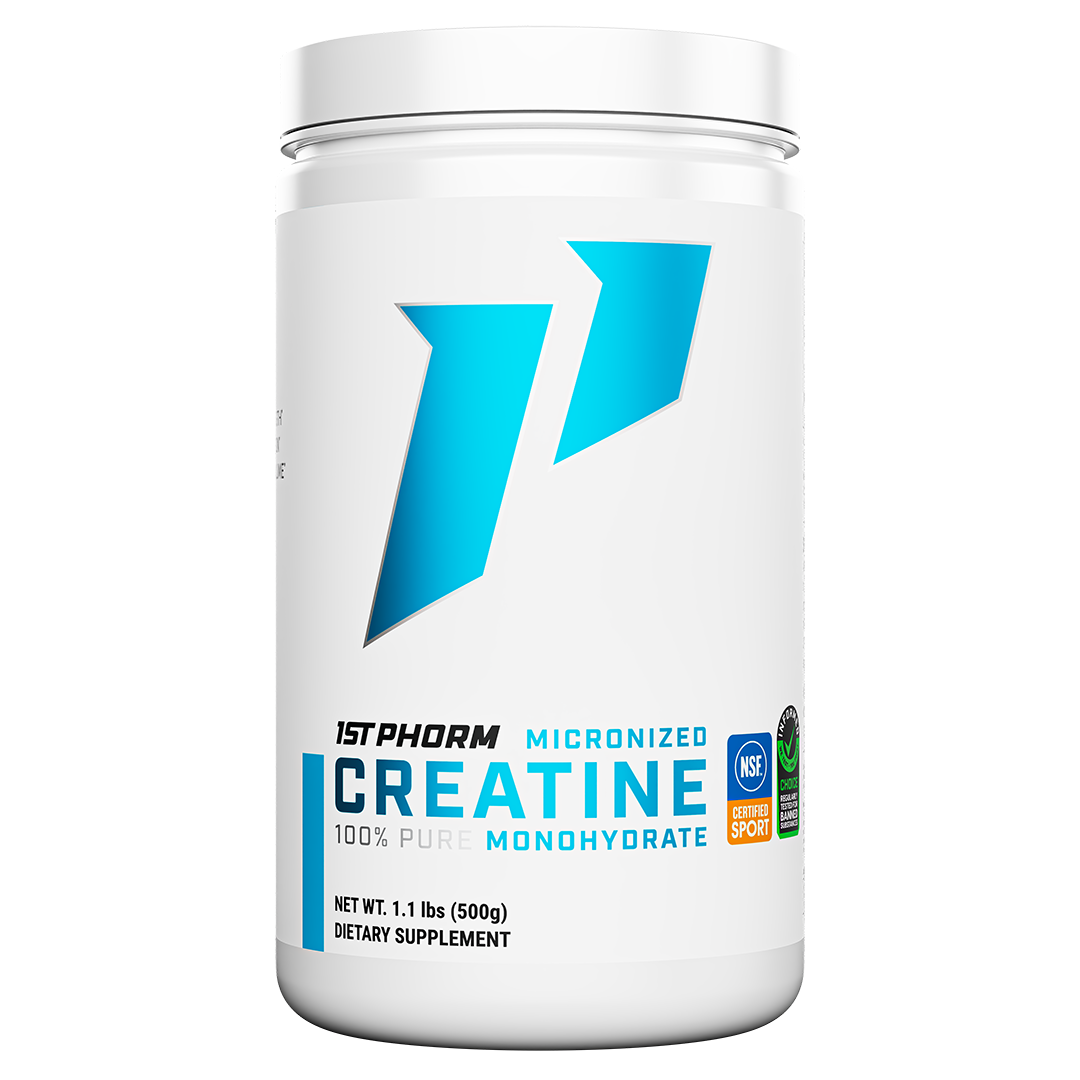
Pure creatine monohydrate
No unnecessary additives or fillers. You get a straightforward formula designed for performance.
Micronized for better mixing
The finer texture reduces clumping and allows smoother mixing in water or other drinks.
Supports ATP production
By increasing creatine stores in your muscles, it helps your body regenerate energy faster during intense workouts.
Enhances strength and endurance
Consistent use can support improved lifting performance and better training output.
Unflavored versatility
It can be added to your existing routine without affecting taste, making it easy to include daily.
What makes 1st Phorm notable is their focus on product consistency and ingredient quality. Each serving delivers what your body needs without unnecessary extras.
How to Use Creatine Effectively?
Stay consistent daily
Creatine works through saturation. Taking it regularly helps maintain higher levels in your muscles.
Combine with resistance training
Strength training creates the stimulus. Creatine supports your ability to perform and recover.
Hydrate properly
Water intake supports muscle function and helps your body utilize creatine effectively.
Avoid overcomplication
You do not need complex loading phases to see results. Consistency matters more than timing.
Pair with balanced nutrition
Protein, carbohydrates, and overall calorie intake still play a major role in strength development.
What To Expect Over Time?
Results from creatine build gradually. You may not notice immediate changes in the first few days, but consistency leads to measurable improvements.
Common outcomes include:
- Gradual increase in strength
- Improved workout performance
- Better muscle recovery
- Increased training confidence
The key lies in patience. Strength development takes time, and creatine supports that process rather than replacing effort.
Building a Stronger Foundation
Strength training is not just about lifting heavier weights. It is about improving how your body performs under stress.
When your energy systems function efficiently, everything else improves. Your workouts feel more productive. Your recovery becomes faster. Your progress becomes more consistent.
Adding the right support helps you move beyond plateaus without unnecessary frustration.
Strength Progress Starts With Better Support
When your strength stops improving, it does not mean your training stopped working. It means your body adapted to your current routine. That stage calls for better support, not just more effort.
You can improve performance by focusing on how your body produces and uses energy. Supporting ATP production allows you to lift heavier, recover faster, and train more effectively over time.
Micronized Creatine Monohydrate from 1st Phorm fits into that approach as a simple and effective addition. It supports your training without adding complexity to your routine.
You are not limited by your current plateau. You are simply at a point where your body needs a stronger foundation.
Once you provide that support, strength gains start moving again, and your training begins to feel productive and rewarding.
Boost strength with better energy support. Learn how 1st Phorm creatine helps improve performance and recovery.